Don't know where to start?
I get it. It can feel overwhelming trying to decide what therapy you need, who to choose and whether you will align with the therapist. If you’re prone to self-criticism, you may also fear feeling judged. Although it is understandable to feel uncertain, many people often say that they are able to tell me things that they have never said out loud; that they feel at ease in my presence, understood and not judged. My approach builds on helping you to feel ready and able to open up at a pace that feels right for you, with curious and compassionate questions and challenges to facilitate self-reflection and self-discovery. I am also knowledgeable when it comes to making clinically sound decisions to align your therapy goals and treatment plan whilst collaboratively guiding you towards your goals.
What to expect?
Lived experience and professional expertise
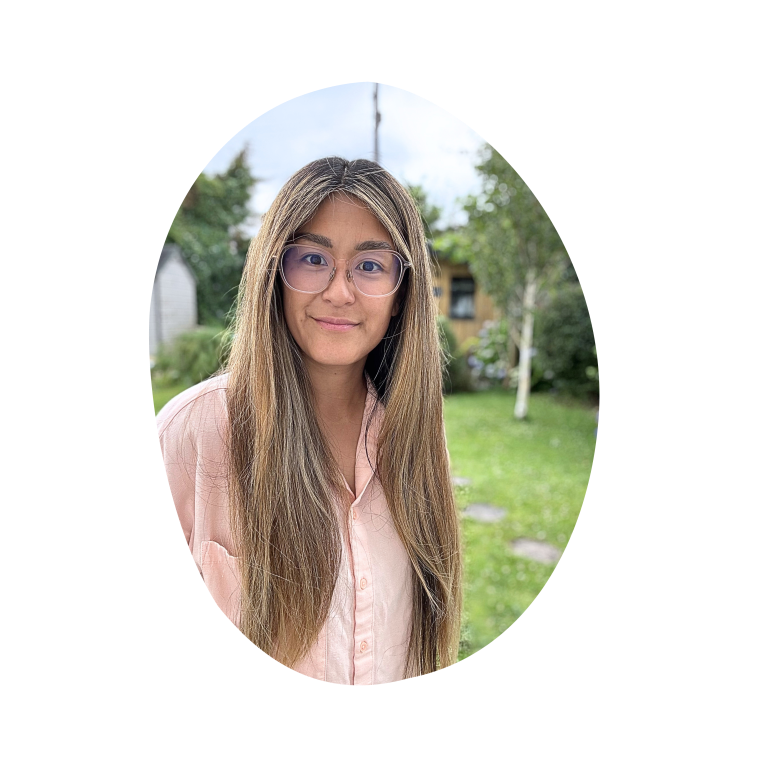
I am a psychotherapist with 14 years’ experience within primary care (NHS) and private sector mental health services. As a late diagnosed, neurodivergent mother of two children, I truly understand the complex interplay of our earlier life experiences, sensory processing and executive functioning differences and how these experiences shape how we see ourselves, others and the world around us. This lived experience has allowed me to understand what is what is ‘changeable’ in therapy.
I’ve always enjoyed connecting with people on a deeper level and see myself as a highly empathic and intuitive person who is able to skillfully guide people towards feeling better. I have helped hundreds of clients meet their goals with high rates of satisfaction and therapy outcomes across primary care and private sector mental health.
My highlights
Work highlights
- The Space Between Therapy private practice – 2023
- Private sector mental health 2022-2026
- NHS primary care talking therapies – 2014-2022
- Honorary Assistant psychologist within the Learning Disabilities Service -2011
- In-patient mental health care assistant 2013
- I am registered with AXA, AVIVA, THINK CBT, Onebright and the National Autistic Society Directory.
- You can find confirmation of my accreditation on the BABCP website.
Education
- University of Plymouth (2013) BSc Psychology degree with First Class Honours
- Certificate of Industrial experience
- A position on the Dean’s list of academic excellence for two consecutive years
- University of Exeter (2014) Post-graduate certificate in Psychological Practice (merit)
- University of Exeter (2019) Post-graduate diploma in High Intensity CBT (merit)
- EMDR Academy (2026) EMDR Academy – Standard Accredited training completed Parts 1 -4
More About Me
My Therapeutic Style
I support clients across all walks of life, though my practice has naturally evolved towards specialising in neurodivergent living and associated experiences.
Neurodivergence is an umbrella term that includes Autism, ADHD, Dyslexia and Dyspraxia, and often involves differences in processing, learning and interacting with the world. There is increasing research that neurodivergent people are more susceptible to health related concerns including hormonal and physiological concerns. Therapy is a space for exploring, understanding and healing from past trauma alongside bridging the pathway to living a life in alignment with your needs in the here and now and the future.
You can find out more about the definition of neurodivergent conditions and neurodiversity here.
I do not view neurodivergence as something to ‘fix’. Many neurodivergent people have been made to feel ‘not good enough’ or ‘too much’ because of how they navigate daily life. My approach is neuro-affirming: supporting you to adapt your life to your needs, with compassion, so you can live more authentically and sustainably. Many clients develop greater self-acceptance and reduced self-criticism as they understand their strengths alongside their challenges.
Self-acceptance begins with understanding what shapes us. My work is grounded in compassion, authenticity and creating safety so you can be fully yourself without the need to perform or hold everything together. CBT can help to explore how past experiences and beliefs influence your present. Neurodivergent people often experience more negative experiences than their neurotypical peers, due to living in a world with expectations that don’t align with their neurotype. Neuro-affirming CBT helped to undo the conditioning and harsh standards that we place upon ourselves, along with building self-compassion to quieten the inner critic. EMDR can also help to heal from stored experiences that elicit strong visceral responses. The outcome? The ability to transform your relationship with yourself and in turn, the relationships and your approach to the world around you.
My Neurodivergent Journey
I was diagnosed in 2021 after years of masking and over-compensating. These strategies worked, until they didn’t. I didn’t realise that I was possibly neurodivergent until my own therapist highlighted this to me during my clinical training. It wasn’t until my first child was born in 2021 that the signs became apparent due to the absence of time to process and decompress whilst in the early stages of motherhood. I was formally diagnosed autistic in 2021 and ADHD in 2025 after trying to adapt to being a mother of two. As a late-diagnosed mother with experience of neurodivergence in the family, I bring lived experience of neurodivergent functioning and sensory experiences.
I now help clients explore their neurodivergent traits and can signpost to relevant assessment pathways where desired. I also support parents navigating services for children with additional needs. Since neurodivergence often runs in families, I tend to explore early experiences, intergenerational patterns, and how these shape our attachment styles, relationships, communication styles and our ability to regulate our emotions in relation to stress.
Before I became a therapist, I studied art, graphics and photography; I believe this was fuelled by my drive to understand how people express their inner worlds through creativity. Discovering that I was neurodivergent brought clarity to my strengths: focused interests, intense passion, hyper-empathy, justice sensitivity, attention to detail and intuitive thinking. By the same token, I also recognise the challenges of sensory overwhelm and difficulties with task initiation.
Rest assured that we won’t be using CBT to increase your tolerance of sensory overwhelm or ask you to push through when you don’t want to. Rather this may involve adapting the environment or actively taking steps to manage dysregulation. Studies show that increasing self-compassion can also help to improve executive functioning. Therefore, compassionate mind approaches along with trauma healing can enable clients to move through periods of stuckness.
My Background
I was born and raised in a rural and predominantly white community to parents from Hong Kong; this gave me a lived understanding of what it meant to feel different. I often struggled to balance cultural expectations of hard work and self-sacrifice with my natural need for creativity, enjoyment and rest. I have a unique experience of having assimilated two cultural experiences. At first this resulted in an internal battle of what ‘rules’ to follow, self-doubt and anxiety. Through a journey of personal growth, I became clear on who I was, what I wanted and what I needed. What I know today is that I enjoy being creatively and intellectually fulfilled and this is how The Space Between was formed. A space to support others with understanding the theory and moving towards their personal interpretations of purposeful living through theoretical, practical and creative means. Compassion Focused Therapy can help to balance the need to strive with the need for rest and joy. There is also emphasis on building self-compassion when you find it difficult or impossible to be kind to yourself or others or to receive kindness from others.
I’ve known what it feels like to experience hard times. Those experiences help me to sit with others in their pain without judgement or fear. I walk the path I invite others to walk; one of curiosity and acceptance that you can be perfectly imperfect. We may not be able to eliminate self-criticism, but we can soften your response to its presence and respond in alignment with what feels right for you.
Today I bring together evidence-based practice, lived experience and genuine human connection to help you to heal. My clients describe me as easy to talk to, calmingand trustworthy. I believe in people’s capacity to feel better because I’ve seen it in the hundreds of clients I’ve supported throughout the years along with my own journey and personal experiences of therapy.
My Clinical Expertise
I have extensive knowledge and experience in the assessment, formulation and treatment of common mental health difficulties.
As a BABCP accredited therapist, my course required a minimum of 450 hours of post-graduate training in CBT which included 200 hours of direct and structured teaching along with 250 hours of self-directed learning and supervision of live therapy.
My training encompassed theoretical learning and clinical skills development in working with common mental health conditions.
Throughout this training there was little mention of how to adapt therapy to align with neurodivergent differences. Much of my knowledge has come from lived experience and in the wider family context, in addition to the hundreds of clients I have supported along the way. I have since completed a varied and wide range of CPD training with reputable clinicians that align with the latest evidence and NICE (National Institute of Clinical Excellence) guidance.
I have since completed additional training with the Compassionate Mind Foundation(2023) and specific training related to neuro-informed adaptations to therapy see here.
In addition I have trained with the EMDR Academy, a highly reputable training academy that is recognised by EMDR Europe. The Part 1 – Part 4 training comprised of 7 days of training and practice.
Cognitive
Behavioral Therapy
A psychotherapy that looks into understanding our experiences based on recent and past experiences, followed by managing how we feel through making sense of our insights and behaviours. CBT is an evidence-based therapy that encourages coping skills and self-advocacy.
Trauma-Focused Therapy
TF-CBT helps to reduce trauma related symptoms associated with PTSD with processing trauma beliefs and thoughts whilst developing coping mechanisms.
Compassion Focused Therapy
CFT is designed to help those who experience shame, guilt and those who are generally hard on themselves and beat themselves up. CFT Draws upon social psychology, evolution, attachment theory and eastern wellbeing principles such as mindfulness and imagery. This therapy can be integrated or delivered as a standalone and can be particularly effective for those who find it difficult to directly ‘challenge’ their thoughts.
EMDR (In training)
Eye Movement Reprocessing and Desensitisation helps to process traumatic memories without having to verbally detail the ins and outs of past traumas.
EMDR is an evidence based therapy covers coping skills, reprocssing and desensitising from moving through trauma in order to heal and thrive. EMDR is particularly helpful for people who find particular events difficult to think about or talk about without feeling overwhelmed or wanting to shut down.
Feeling unsure? Why not book a free discovery call?
Join me on Instagram

Follow me for up to date reflections, tips and insights about evidence-based, neuro-informed practice