Neurodivergent people are typically more sensitive to hormonal fluctuations. Many adults with ADHD have lower dopamine levels which leads to demotivation, loss of interest, focus and difficulties with executive function (task initiation, sequencing of events, impulse control etc).
Neurodivergent people tend to struggle with hormonal changes because estrogen plays a key role in the production of dopamine. Which supports working memory, pleasure and focus. When dopamine levels are higher, alertness, focus and happiness is easier to experience.
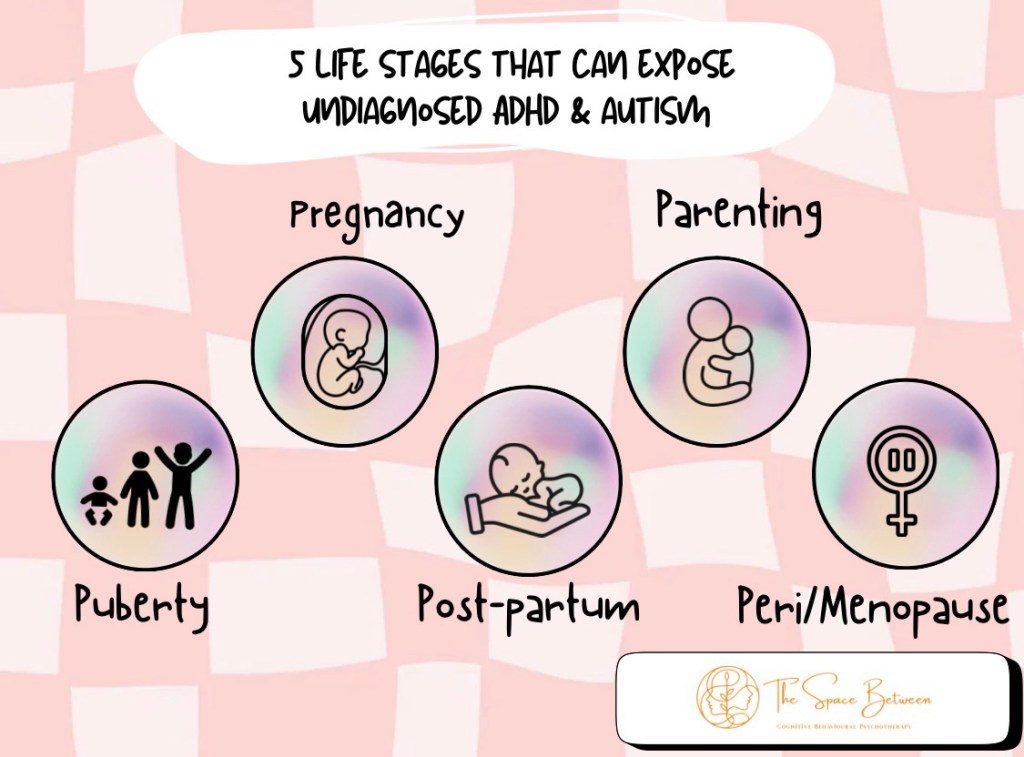
1. In puberty, significant changes take place in the brain’s dopamine system leading to heightened reward sensitivity, increased need for novelty and risk taking. Particularly for people with ADHD, there may be an increase in these behaviours, increasing vulnerability for trauma, mood disorders and addiction / risky behaviour.
2. Pregnancy can lead to improvements or destabilisation in mood due to the significant changes that happen to a persons hormones. A predisposition to lower dopamine levels can be a predictor of maternal mental health problems.
3. Postpartum – Post pregnancy there is a rapid drop in pregnancy hormones that can impact on mental health. Along with sleep deprivation, these factors can exacerbate the propensity for past traumas and intrusive thoughts to surface. This is where perinatal low mood and anxiety may occur, although on paper this may appear to be ‘perinatal anxiety’ broadly speaking, adults may experience difficulties directly linked with ADHD e.g. decision making, postpartum rage and emotional dysregulation, Autistic adults may struggle with sensory overwhelm over and above what many caregivers will experience.
4. Parenting – losing the opportunities to regulate, over-compensate and decompress from neurodivergent challenges indirectly leads to a deterioration in mental health and emotional regulation.
5. Peri/menopause – another period in life where changes are happening to our reproductive organs and adrenal glands.
As a neuro-affirming therapist, I am alert to the challenges that are linked to neurodivergence rather than pathologising experiences as mental health disorders.
Does this sound like you? Unsure if you could be neurodivergent or experiencing generalised anxiety / depressed mood? I am able to dissect and find the intersection with you and support you in the next steps if desired.
Some useful resources to consider: